The Civil War in Missouri
Save ThisMy CollectionJessie Benton Fremont
Main Idea
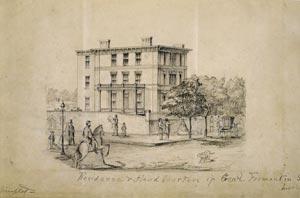
Residence and Quarters of Frémonts in St. Louis (Download 1.9 MB PDF)
Her role in John Charles Frémont’s emancipation proclamation, as well as her other public endeavors, made her a hero of the emerging women’s movement at the end of her life.
Early Life
Highlights
- Jessie Ann Benton was born May 31, 1824, the daughter of Missouri senator Thomas Hart Benton.
- Jessie’s education came from her mother, father, tutors, and a French school in St. Louis.
- When she turned 14 she entered Georgetown’s girls’ boarding school. While in school she met John Charles Frémont, an army lieutenant who was involved with exploration of the West. They married on October 19, 1841, despite the opposition of the Benton family.
- Jessie became a recognized author by transforming John’s notes of westward exploration into a book.
- In 1856, John Frémont became the first presidential candidate for the new Republican Party. Jessie was central to his campaign and in some states posters even appeared that proclaimed “Send Jessie to the White House.”
- While Frémont did not win the election, his candidacy propelled him forward to a military position as head of the Department of the West during the Civil War.
In-Depth
Jessie Ann Benton was born May 31, 1824, the daughter of Missouri Senator Thomas Hart Benton. She was born on her mother’s family estate, Cherry Grove, near Lexington, Virginia. She grew up traveling between her three homes, Cherry Grove, a home in St. Louis, and a home in Washington, D.C. While living in St. Louis at age eight, Jessie experienced the horrific cholera outbreak that struck the city. Jessie’s education came from home schooling by her mother and father and from tutors and a French school in St. Louis. Jessie had a close relationship with her father, often accompanying him on his trips. When she turned 14 she entered Georgetown’s girls’ boarding school. While in school she met John Charles Frémont, an army lieutenant who was involved with exploration of the West. They married on October 19, 1841, despite the opposition of the Benton family. After their marriage, Jessie became a recognized author by transforming John’s notes of westward exploration into a book.
Frémont was involved with making California a U.S. Territory, where he became its third territorial governor. Jessie, who arrived in 1849, became active in California politics, something few women did at the time. In 1856, John became the first presidential candidate for the new Republican Party. Jesse was central to his campaign, and in some states posters even appeared that proclaimed that Jessie should go to the White House. While Frémont did not win the election, his candidacy propelled him forward to a military position as head of the Department of the West during the Civil War.
Civil War and Later Life
Highlights
- John and Jessie arrived in Missouri in 1861. Jessie served as an unofficial adviser to John, and many biographers have noted how much influence Jessie had on decisions that he made.
- In fact, her anti-slavery views helped John make the decision to declare his controversial emancipation order, which freed the slaves of rebels in the state of Missouri.
- When Pres. Lincoln demanded that the order be rescinded, John chose Jessie to go to Washington and argue his case before the president.
- After the war, the Frémonts eventually settled back in California. Jessie continued her success as an author, writing several books about her and her husband’s experiences.
- By the end of her life she had become a hero of the growing women’s movement, and one California group purchased a home for her after John’s death. Jessie died in her Los Angeles home in 1902 at age 78.
In-Depth
John and Jessie arrived in Missouri in 1861. Jessie served as an unofficial adviser to John, and many biographers have noted how much influence Jessie had on decisions that he made. In fact, her anti-slavery views helped John make the decision to declare his controversial emancipation order, which freed the slaves of rebels in the state of Missouri. When Pres. Lincoln demanded that the order be rescinded, John chose Jessie to go to Washington and argue his case before the president. Her efforts were not successful, as Lincoln feared that dealing with slavery in the border states might encourage them to join the Confederacy. Frémont’s action encouraged and rallied the nation’s anti-slavery forces. It also presented a new military justification for emancipation that Lincoln would use for his Emancipation Proclamation in 1863. This controversial action earned Frémont many enemies. Foremost among them were Frank and Montgomery Blair, who worked to have him removed from his position in Missouri.
After the war, the Frémonts eventually settled back in California. Jessie became a successful author, writing several books about her and her husband’s experiences. By the end of her life she had become a hero of the growing women’s movement, and one California group purchased a home for her after John’s death. Jessie died in her Los Angeles home in 1902 at age 78.
Primary Source
Residence and Quarters of Frémonts
in St. Louis (Download 1.9 MB PDF)
in St. Louis (Download 1.9 MB PDF)
Topics